
That moment when you open the front door and immediately see dull footprints on the hall floor can ruin your mood. Hallways and stairs are meant to feel welcoming, but in busy Leeds homes and buildings, they often become the place grime quietly builds up, particularly with rainy Leeds weather tracking mud indoors. Deep cleaning Leeds offers the perfect reset for these high-traffic spots.
The good news is this, a proper house cleaning can change how your whole property feels. Cleaner air, brighter floors, fewer lingering smells, and that calm “sorted” feeling of a well-kept home every time someone walks in.
Let’s get your hallway and stairs back to looking loved, not worn out. Domestic cleaning is a standard part of home maintenance.
Why hallways and stairs get dirty so fast in Leeds
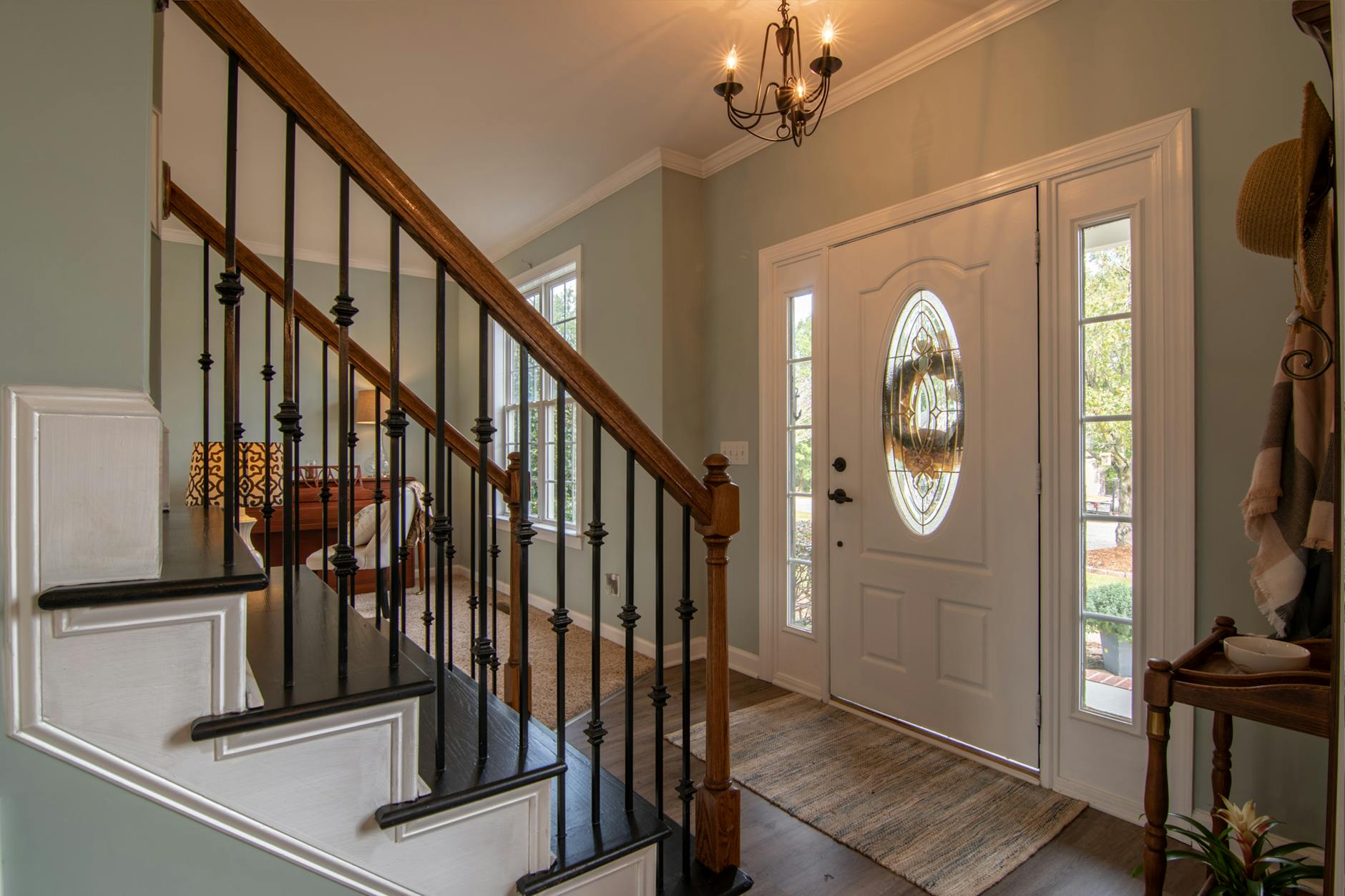 Photo by Curtis Adams
Hallways take the hit first, whether in homes, rental properties, or commercial spaces. Wet trainers, pram wheels, school shoes, work boots, delivery footsteps, it all lands there. Then the stairs keep the story going, with hands on the bannister, fingers on the wall, and the same tread pattern ground in day after day. In Leeds city centre, hallways play a key role in Airbnb cleaning, setting vital first impressions for guests.
In Leeds, the weather adds pressure. Rain and grit stick to soles, then get worked into carpet fibres or dragged across hard flooring. That grit acts like sandpaper, so floors start to look tired even when you hoover often. Meanwhile, dust gathers in corners where airflow is low, such as stair edges, behind the door, and along skirting boards. Commercial cleaning faces amplified challenges from heavier office and public space grime.
Stairs also have a “visibility problem”. You see the centre of each step, but not the riser edges, the side trims, or the corners where fluff gathers. Over time, that hidden build-up creates a flat look and a slightly stale smell.
One more thing catches people out, high-touch surfaces. Light switches, handles, bannisters, and newel posts can look clean, yet feel tacky or dusty. That’s usually the difference between a quick tidy and a real deep clean with proper sanitizing and disinfecting.
If your hallway still looks tired after a vacuum, it’s usually not “dirt”. It’s compacted grit and film that needs a deeper approach.
Deep cleaning Leeds checklist for hallways and stairs (without turning it into an all-day nightmare)
A deep clean works best when you clean in the right order. Otherwise, dust drops onto freshly cleaned floors, and you end up doing the same job twice.
The quick order that saves time
- Dry first: vacuum, dust, and remove debris before any sprays, vacuuming and mopping.
- High to low: start with cobwebs, ledges, and frames, then finish at floor level.
- Edges last: detail the skirting, stair edges, and corners once the main area is clean.
Before you start, match the method to the surface. This keeps finishes looking good and reduces slip risk.
| Surface in hallways and stairs | What usually makes it look “dirty” | Best deep-clean approach |
|---|---|---|
| Carpet or stair runner | Compacted grit, traffic lanes, odours | Slow vacuuming with a powerful upright, targeted spot treatment using enzyme cleaners, then hot water extraction for a professional-level deep clean if heavily soiled |
| Sealed wood or laminate | Grey film, scuffs, sticky patches | Microfibre mop, low moisture, gentle cleaner with eco-friendly products |
| Vinyl or tile | Ground-in grime at edges, dullness | Vacuum first with crevice tool, steam mop for sanitising, then detail corners with a stiff brush and grout cleaner |
| Painted stair spindles | Dust and fingerprints | Damp microfibre cloth with mild soapy solution, then dry buff; for high-traffic areas, use a deep clean wipe-down technique |
Now, the checklist. Use it like a map, not a strict script.
- Clear the “pinch points”: move shoes, baskets, mats, and anything parked on steps, so you can clean properly and access the skirting boards underneath.
- Vacuum like you mean it: go slow, use the crevice tool on stair edges, and lift hair from corners before it tangles.
- Deep clean the skirting boards and stair trims: dust first, then wipe with a barely damp cloth, then dry to stop streaks.
- Refresh bannisters and spindles: wipe with a microfibre cloth, then buff dry, so they feel smooth again.
- Wipe walls at hand height: focus on the stairwell where fingers naturally brush past (use mild cleaner, test a small patch).
- Clean the “forgotten ledges”: picture rails, window sills, radiator tops, and door frames collect dust that drifts back down.
- Deep clean spots, not the whole floor: tackle heel marks, drink splashes, and mystery scuffs where they are, so you don’t over-wet surfaces; for end of tenancy cleaning or one-off cleaning, these details are critical to pass inspections.
- De-gunk the entrance zone: clean the inside of the front door, handles, and the floor area just beyond the threshold.
- While focusing on hallways and stairs, consider bundled services: tasks like oven cleaning, upholstery cleaning, or descaling fixtures are often bundled into a full property reset for thorough results.
- Lift the smell: empty the vacuum, wash washable mats, and let the space air out for 15 minutes after cleaning.
- Finish with a safety check: stairs must be dry, especially if you’ve mopped or wiped edges; double-check skirting boards for any residue.
Gotcha: Don’t soak stair carpet or flood hard floors. Too much moisture can cause smells, swelling, or slip hazards.
If your hallway carpet still looks grey after all that, the issue is often deep-down. At that point, it’s worth considering an expert carpet and hard floor deep cleaning Leeds service, because proper extraction removes what vacuuming leaves behind: https://spotlesscomfort.com/carpet-hard-floor-cleaning/
Keep high-traffic areas cleaner for longer (so you don’t have to deep clean every weekend)
A deep clean feels amazing, but the real win is keeping that “fresh entrance” feeling. Small habits make a bigger difference in hallways than anywhere else.
Start with the doorstep. A proper doormat outside plus a washable mat inside catches a shocking amount of grime. Next, reduce what travels upstairs. Even a simple “shoes off by the door” routine changes the look of stair carpet fast.
Regular cleaning as weekly maintenance can stay simple with a domestic cleaner, or do it yourself:
- Vacuum the hallway and stairs slowly once a week, focusing on edges.
- Wipe bannisters and light switches with a dry or lightly damp microfibre cloth.
- Shake out mats, or wash them when they start to look flat.
Then plan a deeper reset before it gets out of hand. Many homes and workplaces in Leeds feel best with a seasonal deep clean, and more often if there are kids, pets, or constant visitors. This guide helps you judge timing without guessing: https://spotlesscomfort.com/deep-cleaning-leeds-guide/
When you want that “walk in and relax” feeling without giving up your weekend, professional support from fully insured, vetted cleaners who are background checked can keep standards high in the busiest areas of the property. They offer residential cleaning and office cleaning on an hourly rate, so get an instant quote with satisfaction guaranteed: https://spotlesscomfort.com/residential-cleaning/
Conclusion
High-traffic hallways and stairs don’t just get dirty, they quietly change how your whole place feels. A focused checklist for house cleaning brings back brightness, comfort, and that confident first impression. Start with dry cleaning, detail the touch points, then finish strong on floors and edges. For top results, trust professional cleaners, including carpet cleaning services for stubborn traffic lanes. Once it’s fresh again, a few small habits paired with regular deep cleaning leeds will help it stay that way.