

That last inspection can feel brutal. You’ve packed your life into boxes, your back aches, and there it is, the bathroom, silently threatening your full deposit refund with a chalky tap, a faint black line in the silicone, and that dull film on the shower screen that never looks “quite right”.
The frustrating bit is this: bathrooms look clean long before they’re clean to letting-agent standards. If you want the handover to feel like a win (not a post-move argument over “deep cleaning”), you need to hit limescale, mould, and soap scum in the right order, with the right finish.
This guide to end of tenancy cleaning Leeds is written for flats and real move-out pressure, when time is short and the standard is high.
What letting agents in Leeds tend to judge first in a bathroom
Letting agents don’t inspect bathrooms like you do on a normal Monday morning. In inventory inspections, they scan for “proof of neglect” to the letting agent standard while distinguishing between cleaning issues and fair wear and tear. The same three culprits show up again and again: white limescale crust, black mould spotting, and greasy soap scum haze. Even in a tidy flat, these shout “not professionally cleaned”.
A familiar story: a tenant cleans for hours, everything smells of bleach, then the agent leans in and clocks the shower screen edges and the tap bases. The report comes back with “limescale present” and “mould to sealant”. It’s not fair, but it’s common.
If you want a simple way to clean like an inspector, work from what catches light and what collects moisture:
- Chrome taps and shower controls (water marks and limescale rings)
- Shower screen and tracks (cloudy film, trapped gunk in corners)
- Grout lines and silicone (mould freckles, pink residue)
- Toilet base and hinges (splashes, dust and hair, missed disinfecting; sanitise surfaces)
- Skirting boards (dust that catches light)
- Extractor fan cover and ceiling corners (dust that reads as “damp issue”; check ventilation)
The biggest shift is psychological: stop cleaning for “freshness” and start cleaning for finish. That means dry buffed taps, clear glass, no residue in seams, and no visible build-up when the bathroom light hits at an angle.
If your move-out clean covers the whole flat, it helps to align the bathroom with a wider plan like this Leeds end of tenancy cleaning checklist, so the bathroom doesn’t end up perfect while the rest slips.
Limescale removal that leaves taps, tiles, and glass looking new
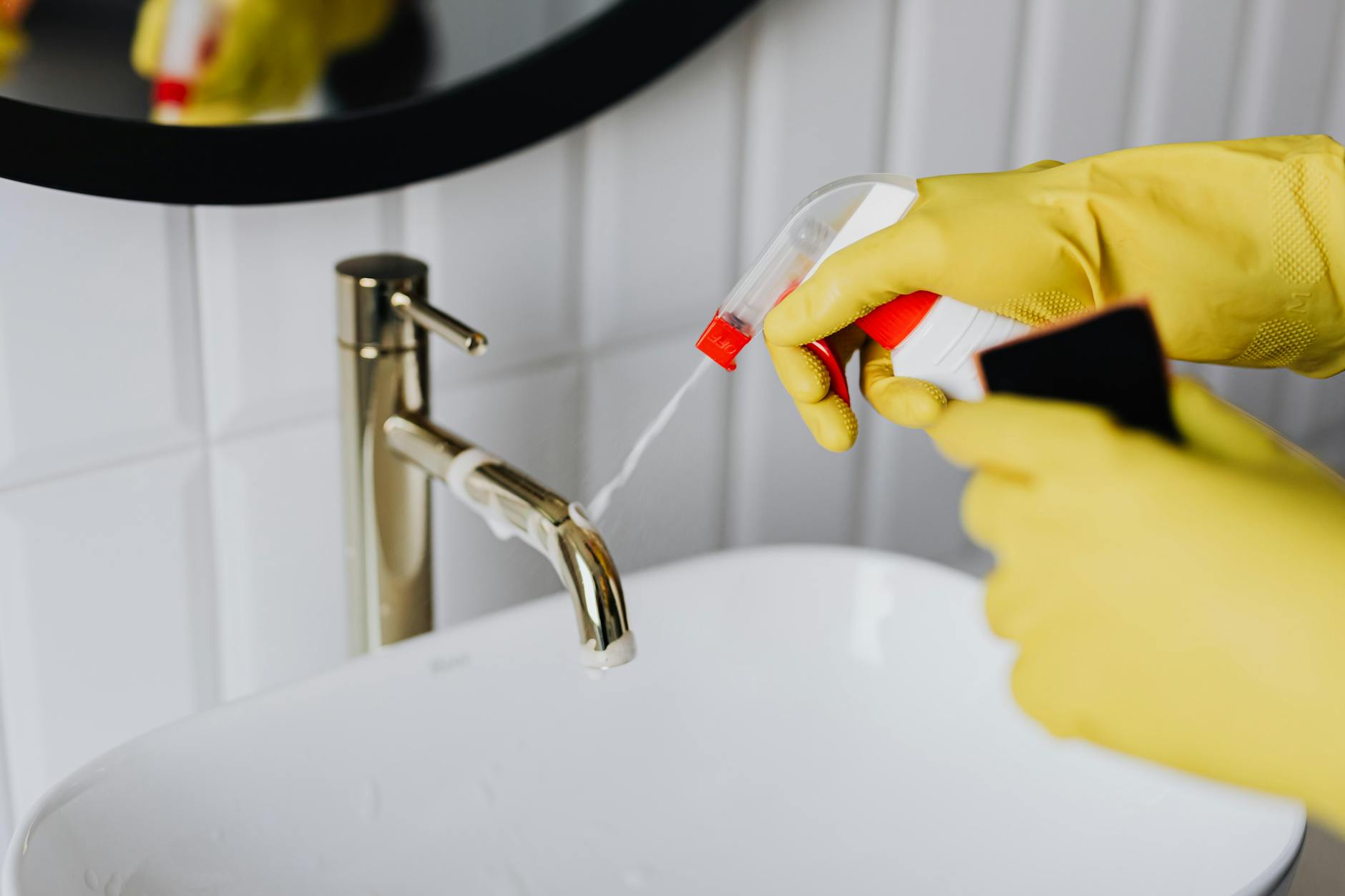
Photo by Karolina Grabowska www.kaboompics.com
Limescale is the one that steals your “sparkle”. It makes clean metal look tired, glass look foggy, and tiles look older than they are. The good news is it’s predictable, which means it’s beatable.
Here’s how to get the satisfying, mirror-like result without wrecking surfaces.
Start with the right product. A dedicated limescale remover is usually easiest because it’s made to cling and dissolve mineral deposits. White vinegar or bicarbonate of soda can work for light build-up, but they often need more time and repeat passes. On delicate natural stone (some feature tiles), avoid acidic products unless you know it’s safe for that surface.
Target the hotspots, not the whole room. Wrap a limescale-soaked cloth around tap bases, spouts, and shower heads for effective tap descaling so the product stays in contact. For shower screens, apply product low down first, where water sits and scale forms thickest.
A few practical moves that change the result fast:
- Give it dwell time, then agitate gently with a non-scratch pad.
- Use an old toothbrush for tap joins, grout edges, and shower head nozzles.
- Rinse thoroughly, then dry and buff with a microfibre cloth (this is where the shine appears).
Two safety rules that also save your finish: don’t use metal scourers on chrome, and never mix bleach with acidic cleaners. If you’ve already bleached something, rinse well and ventilate before switching products.
If you’re aiming for end of tenancy cleaning Leeds standards, limescale isn’t “mostly gone”. It’s gone from the tap bases, gone from the overflow holes, gone from the shower head face, and gone from the glass edges where it hides. While bathrooms are vital, oven cleaning is another key task that shouldn’t be overlooked in a full move-out plan.
For a broader view of what tends to trip people up at inspection time, these end of tenancy cleaning in Leeds tips line up well with what agents flag most often.
Mould and mildew, soap scum: the make-or-break details on the inventory report
Mould and mildew plus soap scum are sneaky because they sit in the places your eyes stop noticing. Then you move out, the bathroom is empty, and suddenly every little mark looks louder.
Mould and mildew usually shows up in silicone seams, around the bath edge, and in tile grout where moisture lingers. If it’s surface mould and mildew, a proper mould remover can lift it, but you need to keep the area ventilated and let the product work. If silicone is heavily stained all the way through, cleaning may improve it, but it might not return to bright white. That’s when tenants get caught out, because it still looks “dirty” on a check-out report.
Soap scum is the other villain. It’s that sticky, dull layer that clings to shower screens, tiles, tile grout, and bath sides. It builds up from soap, body oils, and product residue, and it grabs dirt like glue. The trick is not just scrubbing it off, but removing it without smearing it around.
A simple approach that works well in flats:
- Use a bathroom cleaner that cuts through soap scum and oils first.
- Rinse, then focus on scrubbing bathroom tiles to handle any remaining limescale (otherwise you can lock the scum in place).
- Finish glass with a streak-free cleaner, then dry, so it looks sharp under light.
To help you check your own work like a letting agent and achieve professional-standard results from professional cleaning services, here’s a quick bathroom cleaning checklist.
| Area | What “professional-standard results” looks like |
|---|---|
| Taps and chrome | No white rings at bases, dry buffed, no water marks |
| Shower screen | Clear from corner to corner, clean tracks, no haze line |
| Tiles and grout | No visible mould and mildew spotting, no greasy film when touched |
| Bath and sink | No dull scum ring, plugholes clean, overflow wiped |
| Toilet (all sides) | Clean around hinges and base, no splash marks, fresh smell |
| Vent and corners | No dust build-up, no cobwebs, no musty damp odour |
| Skirting boards | Clean edges, no dust or marks, freshly wiped |
One last reality check: if you’re doing this at midnight before key drop, it’s easy to miss the “finish steps” that make it look professional. That’s where people lose money, not because they didn’t clean, but because it didn’t present clean. For a successful move-out, pair bathroom work with essential companion tasks like oven cleaning and carpet cleaning.
If you’d rather hand the stress off and walk away confident, booking professional cleaning services through our end of tenancy cleaning service can turn the bathroom from your biggest risk into the most impressive room in the flat.
Conclusion
A deposit-safe bathroom clean that aligns with your tenancy agreement and tenancy deposit scheme comes down to three wins: descale until chrome shines, treat mould so seams look cared for, and strip soap scum so glass and tiles look crisp in bright light. When those three are handled properly, the whole bathroom feels newer, fresher, and far harder to criticise.
If you want that “keys handed over, deposit released with landlord approval, done” feeling from move-out cleaning, now’s the time to sort it while the bathroom is empty and the problems are easy to spot. Your future self will thank you for the calm. Professional cleaning services can also handle oven cleaning and carpet cleaning to ensure the entire property is ready for the next tenant.