
If your bathroom looks “fine” until the light hits it, you’re not imagining things. That chalky ring at the tap base, the cloudy shower screen, the dull tiles that never quite shine, hard water has a way of stealing the clean feeling fast.
The good news is you don’t need a full renovation to get that hotel-fresh finish. You need a smarter bathroom deep cleaning routine that treats limescale like the main character, not an annoying side quest.
Below is a Leeds-friendly checklist built for hard water homes, plus a few habits that keep the sparkle for longer (so you’re not re-cleaning the same stains every weekend).
Why hard water makes “clean” feel impossible in Leeds bathrooms
Hard water leaves minerals behind when it dries. On a mirror, it’s a faint mist. On chrome, it’s that gritty, white crust that clings like it’s paying rent. Then soap mixes with those minerals and turns into stubborn soap scum that laughs at quick wipe-downs.
What makes it extra frustrating is the loop it creates. You clean, it looks better for a day, then the marks creep back. After a while, the bathroom starts to feel tired, even if you’ve been trying.
There’s also a hygiene angle. Limescale isn’t just ugly, it creates rough surfaces where grime sticks more easily. Leeds Live highlights how quickly taps can build up deposits and why leaving it too long makes removal harder (and fittings less pleasant to use), see their local piece on removing limescale from bathroom taps.
So the goal isn’t “scrub harder”. It’s “remove minerals first, then clean and disinfect”. Once you switch the order, everything gets easier, and the bathroom looks brighter, not just wiped.
If your cloth keeps snagging on a tap base, you’re not dealing with dirt. You’re dealing with mineral build-up, treat that first.
Bathroom deep cleaning checklist (hard water edition)
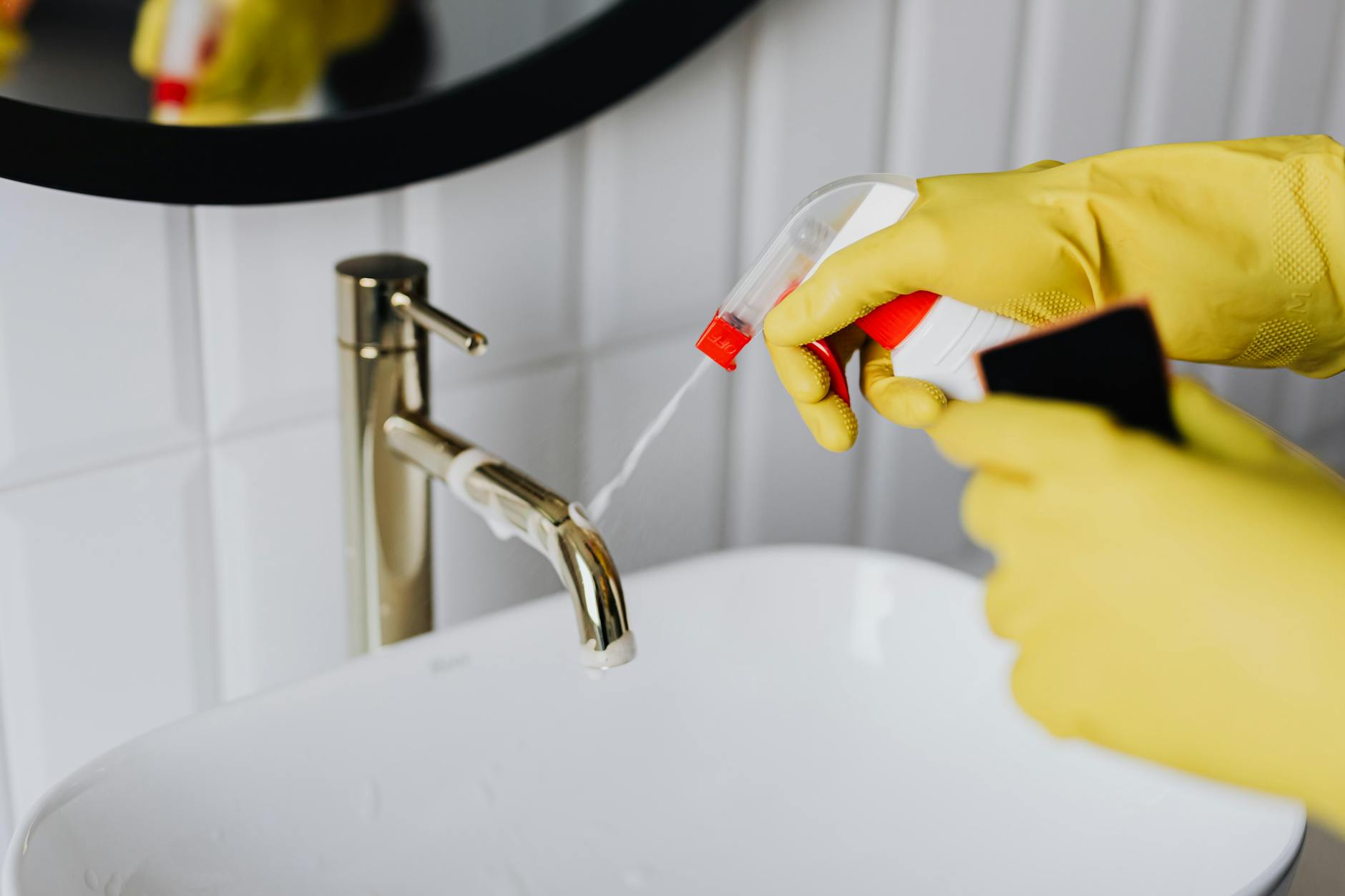
Photo by www.kaboompics.com
Before you start, open the window and clear the surfaces. A deep clean works best when products can sit and do their job. In hard water homes, dwell time is half the win.
The order that stops you re-doing work
Start high and dry, then go wet, then finish with floors. Think of it like painting a wall, prep first, then the satisfying finish.
The checklist that hits the spots Leeds hard water loves most
Use this table as a quick reference while you work:
| Bathroom area | What to target (hard water signs) | What “done” looks like |
|---|---|---|
| Taps and handles | White crust at the base, dull chrome | Smooth to the touch, reflective finish |
| Shower screen and tiles | Cloudy film, speckled drying marks | Clear glass, brighter tile colour |
| Shower head | Uneven spray, blocked holes | Even spray pattern, no chalky rim |
| Bath and sink | Grey ring, rough patches | Glossy surface, no drag under fingers |
| Grout and silicone edges | Dark lines, stubborn residue | Cleaner lines, no slimy feel |
| Toilet base and hinges | Hidden scale, splash marks | No staining around bolts or base |
Now, the practical “what to do” without turning your day into a chemistry lesson:
- Descale first: Apply a suitable descaler to taps, shower glass, and tile edges, then leave it to work. Re-apply on heavy build-up rather than scrubbing aggressively straight away.
- Detail the “touch points”: Clean handles, flush buttons, and light switches after descaling. These spots decide whether a bathroom feels clean.
- Grout needs patience: Work in small sections. If the grout is porous, avoid soaking it for ages. Clean, rinse, dry, then repeat if needed.
- Don’t skip the hidden rims: Look under tap spouts, behind the basin pedestal, and around shower door tracks. Those are the areas that betray a “quick clean”.
For a broader room-by-room view of what pros include (and what usually counts as a deep clean add-on), it helps to scan what’s included in professional house cleaning in Leeds.
A quick reality check (so you don’t ruin fittings)
Chrome and coated taps look tough, but they scratch easily. The scratch marks then hold onto mineral deposits, so the tap looks worse faster.
Avoid metal scourers and harsh abrasives on chrome. A scratched tap attracts limescale like velcro attracts fluff.
Products and tools that work well for hard water bathrooms (without harsh fumes)
Hard water cleaning is less about having a cupboard full of sprays, and more about picking a few that do distinct jobs.
You need:
- A descaler that’s designed for bathroom fittings and safe for your surfaces.
- A non-scratch pad or soft brush for textured areas (like grout lines or shower tracks).
- Microfibre cloths for drying and buffing, because drying is what prevents those new water marks.
- A squeegee for shower glass, which is the easiest “keep it clean” tool you’ll ever buy.
Vinegar-based solutions can help on some surfaces, but be careful. Natural stone and certain finishes don’t like acids. If you’re unsure, test a small hidden area first and rinse well.
If you want another checklist angle to compare against, FastKlean has a useful overview in their complete bathroom cleaning checklist. Use it as a prompt list, then adjust for hard water by prioritising descaling.
How to keep the sparkle for longer (and when it’s time to call in help)
The secret to a bathroom that stays “just cleaned” is tiny habits that stop minerals drying on surfaces.
Two minutes makes a difference:
- Squeegee the shower screen after use.
- Wipe taps and the basin rim dry after brushing teeth.
- Leave the extractor on long enough to clear steam, because damp holds onto grime.
Then, set a simple rhythm. In hard water areas, waiting too long turns a quick job into a wrestling match. If you’re deciding what “often enough” looks like, this guide on how often to deep clean in Leeds is a handy benchmark.
Sometimes, though, you hit the point where motivation isn’t the problem, time is. Or the limescale has been building for years. That’s when a professional bathroom deep cleaning resets everything in one go, so weekly upkeep actually works again.
If you’re moving out, the pressure jumps. Landlords and letting agents notice taps, shower screens, grout, and toilet bases immediately. For that scenario, booking a service built to meet inspection standards can save a lot of stress, see end of tenancy cleaning in Leeds.
Conclusion
Hard water doesn’t mean you’re bad at cleaning, it means your bathroom needs a different plan. Descale first, detail the touch points, then dry and buff so marks don’t bounce back overnight. Once you follow that order, bathroom deep cleaning stops feeling endless, and starts feeling satisfying.
Want that bright, squeaky-clean finish without giving up your weekend? Book a proper reset clean, then enjoy the easy maintenance that finally sticks.